Texas Roof Insurance: Actual Cash Value vs. Replacement Cost
For years, most Texas homeowners assumed that if hail ruined their roof, insurance would pay for a new one minus the deductible. That is no longer a safe assumption. More policies now pay a depreciated amount for older roofs, exclude hail damage that only affects appearance, or both, and many homeowners find out only after a storm.
Replacement cost vs. actual cash value
Your policy settles a roof claim in one of two basic ways.
- Replacement cost (RC or RCV): the insurer pays what it costs to repair or replace the roof at today's prices, minus your deductible. Age is not held against you.
- Actual cash value (ACV): the insurer starts with the replacement cost, subtracts depreciation for the roof's age and condition, and then subtracts your deductible.
The Texas Department of Insurance (TDI) explains that ACV policies usually cost less up front but pay less when you file a claim. You can read TDI's own comparison on its replacement cost vs. actual cash value page.
How roofs are being moved to ACV at renewal
You may not have chosen an ACV roof. Many homeowners get one at renewal, often through an endorsement buried in the renewal packet. TDI notes that companies may switch older roofs to actual cash value at renewal, or decline to cover a roof in poor condition. The changes usually take one of three forms:
- ACV roof endorsement. The dwelling stays on replacement cost, but the roof surface is settled at actual cash value once it passes a stated age. Ten to fifteen years is a common trigger.
- Roof payment schedule. Instead of calculating depreciation claim by claim, the policy uses a sliding table that pays a smaller percentage of replacement cost each year the roof ages. Some schedules pay full value for a roof a few years old and only a small fraction for a roof past 20 years.
- Non-renewal or inspection requirements. Some insurers inspect roofs before writing or renewing a policy and may raise the rate, require repairs, or decline coverage based on what they find.
Every company writes these provisions differently, so the only reliable answer is in your own declarations page and endorsements.
What a depreciated payout looks like
TDI uses a simple example: a $200,000 home with a $4,000 deductible and a roof that costs $10,000 to replace.
- Replacement cost policy: the insurer pays $6,000.
- ACV, 5-year-old roof valued at $8,500: the insurer pays $4,500.
- ACV, 10-year-old roof valued at $7,000: the insurer pays $3,000.
- ACV, 20-year-old roof valued at $4,000: the insurer pays nothing, because the depreciated value does not exceed the deductible.
Real DFW numbers are larger. An architectural shingle replacement on an average DFW home commonly runs $8,000 to $15,000 (see our 2026 roof replacement cost guide), and wind and hail deductibles are often a percentage of your dwelling coverage. On an older roof under ACV, the gap between the check and the cost of a new roof can easily reach several thousand dollars.
Key point: under a replacement cost policy, insurers often pay in two parts: a first check for the actual cash value, then the held-back depreciation once the work is done. Under ACV or a roof payment schedule, there may be no second check at all.
Cosmetic damage exclusions
A cosmetic damage exclusion removes coverage for hail damage that changes how the roof looks but does not affect its ability to keep water out. Texas regulators approved optional cosmetic damage endorsements back in 1998 (form HO-145 for homeowners policies), originally tied to discounts for impact-resistant roofs. Today, many carriers use their own versions, and they are not limited to impact-resistant roofs.
These exclusions matter most for:
- Metal roofs, where hail dents are often treated as cosmetic if the panels and seams still shed water.
- Impact-resistant (Class 4) shingles, where hail may leave marks without cracking the mat.
- Gutters, vents and trim, where dents may or may not be covered depending on the wording.
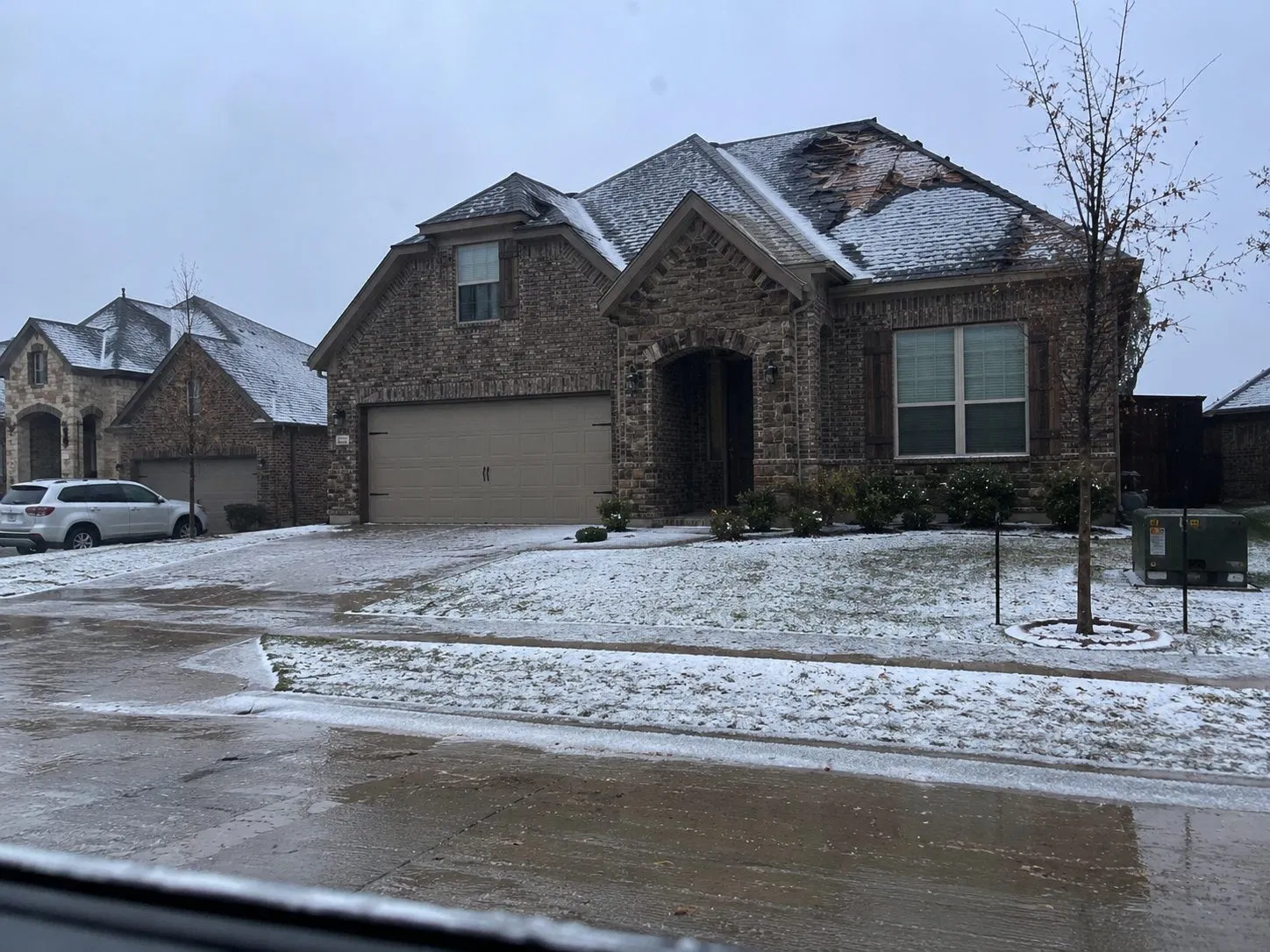
The fight in a cosmetic exclusion claim is usually over "functional" damage: cracked or fractured shingles, punctures, exposed mat, lost seal strips, or damaged seams that can let water in. Clear photos and a detailed inspection report make a real difference here.
Your wind and hail deductible
TDI warns that the deductible for wind and hail damage is often higher than the deductible for other losses. In North Texas, many policies now use a percentage deductible based on your dwelling coverage (Coverage A), not on the size of the claim. A 2 percent deductible on a home insured for $400,000 is $8,000 out of pocket before the insurer pays anything. Combine that with ACV depreciation on an older roof and a hail claim can pay far less than homeowners expect.
Texas law also requires you to pay your own deductible. A contractor cannot legally waive or absorb it.
What to check in your policy
Pull your declarations page and endorsement list, or ask your agent to walk you through them. Look for:
- Loss settlement for the roof. Search for phrases like "actual cash value loss settlement," "roof surfacing," or "roof payment schedule."
- The age trigger. If there is an ACV endorsement, at what roof age does it apply?
- Your roof's age and material on file. TDI recommends confirming that the age and material listed on your policy are correct, and telling your insurer when you replace your roof.
- Cosmetic damage language. Does it apply to the whole roof or only certain materials, and does it cover gutters and metal trim?
- Your wind and hail deductible. Is it a flat amount or a percentage, and what is the dollar figure today?
- Discounts. Ask whether a newer roof or impact-resistant material would lower your premium.
If anything is unclear, ask your agent to explain it in writing. TDI's help line at 800-252-3439 can also answer general questions.
What it means for a hail claim
Once you know your coverage, a hail claim gets more predictable. A few practical steps:
- Get an inspection before you file. A roofer can tell you whether there is functional damage and roughly what repairs would cost, which helps you decide whether a claim makes sense given your deductible.
- Document everything. Date-stamped photos of the roof, gutters, vents and soft metals, plus local hail reports from the storm date, support the claim.
- Be ready for age and wear questions. Insurance does not pay to replace a roof just because it is old or worn. Adjusters will look for storm damage specifically.
- Understand the payment structure. Know whether you will get one check or two, and what proof the insurer needs to release any held-back depreciation.
- Read the estimate line by line. Compare the adjuster's scope against your contractor's scope and ask about anything missing.
Our insurance claims page explains how we work alongside your claim, and our guide to filing a hail damage claim in North Texas walks through the process step by step.
Planning ahead: if your roof is approaching the age where your policy switches to ACV, replacing it before a major storm can restore full coverage and may qualify for a better rate. Ask your agent before you decide.
Get a clear picture before the next storm
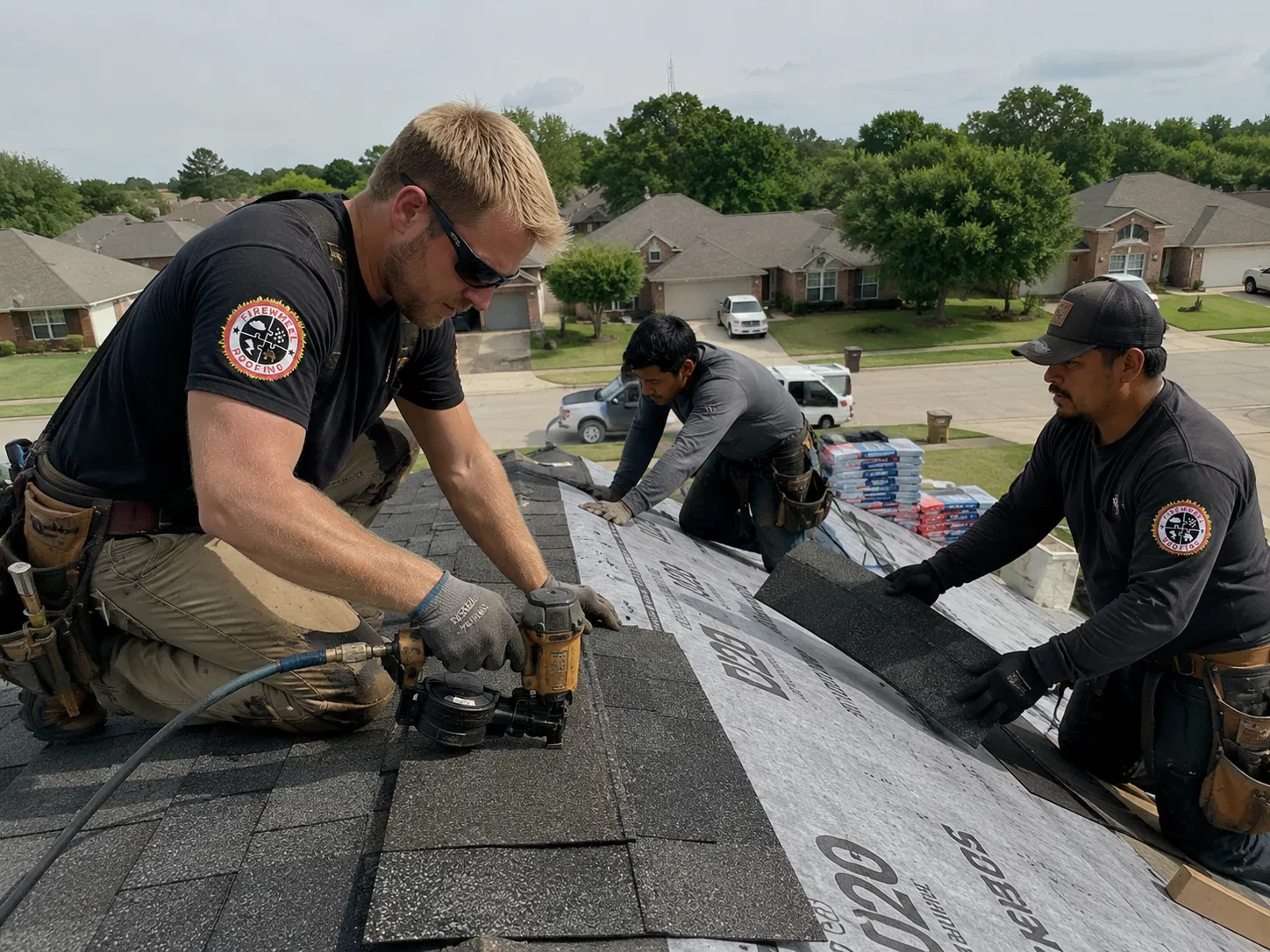
Insurance language is hard to read, and the time to understand it is before hail season, not after. Firewheel Roofing is a military-family owned roofing contractor based in Garland and serving homeowners across DFW since 2014. We can inspect your roof, document its condition and age, and give you an honest assessment of whether you have storm damage worth claiming. If a replacement makes more sense, we can walk you through financing options too.
Call (469) 387-3848 or request a free estimate to schedule an inspection.
Frequently Asked Questions
How do I know if my roof is covered at actual cash value?
Check your declarations page and endorsement list for phrases like "actual cash value loss settlement," "roof surfacing" or "roof payment schedule." These provisions often appear at renewal. If you are not sure, ask your agent to confirm in writing how your roof would be settled and at what roof age any change applies.
Can my insurer switch my roof to ACV without my approval?
Insurers can change coverage terms at renewal, and TDI notes that companies may move older roofs to actual cash value or decline coverage for roofs in poor condition. Changes are usually disclosed in renewal documents, so read your renewal packet carefully and ask your agent about anything that looks different from last year.
Does a cosmetic damage exclusion mean hail damage is never covered?
No. A cosmetic exclusion removes coverage for damage that only affects appearance. Damage that affects the roof's ability to keep water out, such as cracked shingles, punctures or damaged seams, is generally still covered. The outcome depends on your policy wording and on how well the functional damage is documented.
Will replacing my roof lower my insurance premium?
Often, yes. TDI says newer roofs often get a better rate than older ones, and materials resistant to wind, hail or fire may qualify for discounts. A new roof can also move you out of an ACV age bracket. Discount amounts vary by company, so ask your agent before choosing materials.
Keep reading
Get a Free Roof Inspection
Straight answers, no pressure. Serving Garland, Dallas & all of DFW.
Get My Free Estimate → 📞 (469) 387-3848